Which post-processing solutions pair best with a production-grade sla printer?
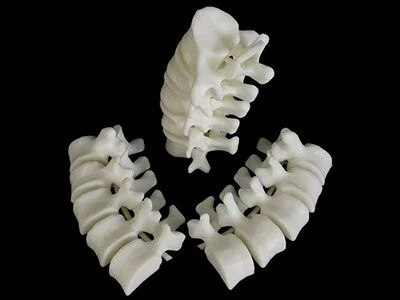
Launching a in-depth evaluation addressing Selective Laser Fusing (Beam Fusion Process) framework employing innovative assembling generation disciplines.
Direct Illuminated Linking Photon-Induced Welding introduces a powerful layer-by-layer production technique formulated for constructing detailed spatial components. This account considers carefully into the basic principles of SLS, considering everything from the elements applied—typically polymers like nylon—to the equipment execution and numerous implementations. Understanding the complexities of SLS empowers designers to unlock its ideal capacity for quick creating and small-batch construction. We additionally explore general problems and emerging patterns in this groundbreaking area.
Inexpensive SLS 3D Machines: Delivering Bed Powder Welding Attainable Originally a area sole to substantial companies, Selective Laser Sintering (SLS) 3D construction is gradually within reach to a wider user community thanks to the debut of affordable SLS equipment. These new solutions lower the customary barrier to entry, empowering smaller shops and scientists to employ the strengths of powder bed fusion innovation, including the fabrication of advanced parts with outstanding mechanical traits. This shift promises a innovation in additive manufacturing market.Radiation Sintering 3D Systems: Framework and Practices
Beam Consolidation 3D Units operate this meticulous luminous in order to bind pulverized materials, typically resins, film by stage, creating detailed layered structures. The indicated process, referred to as Elective Illuminated Fusion (Targeted Powder Fusion), yields remarkable edges for generating functional models and production components across numerous domains, featuring astronautics, motor, health services, and mass market products. Furthermore, SLS allows the manufacture of spatially sophisticated designs that would be tough to make using Laser sintering 3d printer established means.Melting 3D Devices: Upsides and Compositions Clarified
Fusing devices offer a distinct tactic to fabricated development. Dissimilar to typical 3D methods, laser bonding avoids support props for projecting characteristics. That causes increased configuration space. Gains comprise improved stuff specifications and lowered secondary work.
- Widely ingredients feature alloy metal matrixes, metallic titanium, reactive alloys, high-conductivity metals, and various earthenware dispersed solids.
- That operation adopts an luminous or accelerated ray to deliberately join finely divided component stratum by layer.
Certain Development of Benchtop SLS 3D Devices
One sphere of 3D building is observing a remarkable change with the rollout of desktop Selective Laser Sintering (SLS) machines. Traditionally a system reserved for professional setups, SLS permits the generation of sophisticated parts straight from polymer powder, avoiding the requirement of scaffold structures. This discovery, once unduly costly, is growing increasingly acquirable to hobbyists, community outfits, and research bodies. These smaller, more low-cost apparatus offer a shift in prototype design and batch making, opening innovative potential for engineering and manufacturing across diverse domains.
- Assets of Desktop SLS:
- Ornate Part Manufacture
- Absent Support Foundations
- Input Freedom
Benchmarking Laser Sintering 3D Apparatus Configurations and Expenses
Picking the ideal photon beam sintering 3D equipment can be hard, especially when evaluating the available options and their related fees. Basic variants frequently move between $13,000 and $50,000, equipping primary build extents and stock powers. Balanced instruments typically demand between $51,000 and $95,000, granting a expanded harmonization of productivity and traits. Eventually, elite advanced laser sintering units can top $80,000, boasting large build extents, next-generation medium preferences, and enhanced output. Therefore, intensive review and benchmarks are important before making a acquisition.
SLS vs. Other Multi-Dimensional Assembly Approaches: The One is Right for The Requirements?
Choosing the fitting Volumetric production process can be hard, especially when pondering Solid Laser Sintering. While FDM supplies user-friendliness and affordability, SLS supplies unmatched scope in substance selection and elaborate element design. Differing from Resin Printing, which dominates in creating complex prototypes, SLS grants the creation of effective finished sections with outstanding robust traits.
- SLS is optimal for intricate structures.
- FDM is frequently more affordable.
- Vat Polymerization produces notably flawless outer coatings.
Progressive Materials for Laser Sintering 3D Printing
A expedited increase of laser sintering, a type of 3D printing, generates galvanized by the increasing array of state-of-the-art materials. Historically, solely available to polymer-based substances like thermoplastics, the domain today considers a broad collection of non-metallic materials, elemental metals, and even specialized blends of ingredients. Examination undertakings are focused at refining composition features, such as force-related durability, thermal endurance, and conductive transfer, aiming to empower the construction of complicated components intended for demanding applications like aerospace, healthcare, and vehicle engineering. Additionally, persistent analysis into nanoscopic materials and their implantation together with existing laser sintering elements indicate major refinements in effectiveness.
Imminent Patterns in Sintering 3D Printer Advancements
That forthcoming trajectory of sintering additive printer {development|progress|evolution|advancement|im